
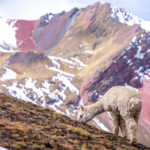
In this first article about craftsmanship around the world, we will focus on analyzing the creations that exist in the magical and exotic country of Peru. Peruvian artisans are recognized for their skill and creativity in various forms of art and craftsmanship.
1. Alpaca and Wool Textiles

The Andes region, especially Cusco and Puno, is known for the production of textiles made from natural alpaca fibers and sheep wool. Peruvian artisans create beautiful textiles such as shawls, blankets, ponchos, and decorative weavings using ancestral hand-weaving techniques. Below are some of them:
Woven on a Loom
This is one of the oldest and most widely used techniques in Peru. Peruvian weavers use threads of different colors and patterns to create their own ponchos, blankets, shawls, and skirts.
Natural Dyeing
Weavers and artisans use dyes obtained from plants, such as the famous cochineal to achieve intense red and pink colors, and walnut husks for brown tones. By applying these natural dyes to the threads before weaving, we achieve a wide range of vibrant and long-lasting colors.
Embroidery
Peruvian embroiderers use needles and threads to decorate clothing, home textiles, and accessories. As mentioned, Peruvian artisans love colorful designs that symbolize animals and plants.

Warp and Weft
This technique refers to the vertically tensioned threads on the loom, while the weft is the thread that passes horizontally between the warp threads. This technique allows for the creation of geometric patterns and complex designs in Peruvian textiles.
As an interesting fact about Andean traditions, we will end the textile section by talking about the quipu. This ancient system of record-keeping and communication was used by Andean civilizations, especially the Incas, and consisted of cords of different colors and knots, where the knots and their position on the cord represented numerical and textual information. It seems they may have also been used to record information about taxes, censuses, and historical events. Today, it is still being studied by experts as it is considered a historical and cultural object in ancient Inca society.
2. Ceramics

Secondly, we will talk about ceramic artisans, whose diversity and rich tradition can be observed especially in the regions of Cusco, Ayacucho, and Puno. As with textiles, Peruvian ceramics often feature designs with rich colors and symbols of the country's traditions.
Some of the highlighted techniques are:
- Hand Modeling: As a good artisan, this technique simply uses hands and some basic tools like sticks, spatulas, or stones to give organic shapes to the design.
- Potter's Wheel: This technique achieves more symmetrical and precise shapes as it allows the clay to spin on a disk while being molded with hands or other special tools.
- Relief Modeling: Thanks to sculpting techniques, decorative patterns can be created and details can be added in relief to the surface of the clay.
- Engobing: This technique is used to create designs in different shades through the application of engobes, which are pre-colored clays. These are placed on the surface of the ceramics before firing.
- Painting and Decoration: Using paints and glazes, those characteristic Peruvian color designs are achieved. These adornments often represent human figures, fauna, flora, and geometric designs.
- Outdoor Firing: The firing phase is done using outdoor wood-fired kilns. This traditional type of firing can create variations in the colors and textures of the ceramics, giving them a unique aesthetic.
- Firing in Electric or Gas Ovens: Nowadays, to achieve more consistent results and maintain the color and shine of the glazes, electric or gas ovens are used as this makes the firing phase more precise and controlled.
3. Wood Carving

Another material that Peruvian artisans master is wood. This can vary depending on local availability and the characteristics required for the project.
Types of Wood
- Huayruro: Reddish wood with great hardness. It is used in the making of jewelry, amulets, beads, and other small objects due to its great resistance.
- Palo Santo: Known for its sweet fragrance and light yellow to brown color. Locals mainly use it to create sculptures and decorative objects.
- Algarrobo: This is a hard and resistant wood found on the Peruvian coast. Its warm tone is used to create furniture, musical instruments, and kitchen utensils.
- Cedar: Very popular due to its great durability and beauty. Its reddish tones and resistance to moisture and insects make it ideal for making furniture, boxes, carvings, and other decorative objects.
- Moena: Dark brown to black wood with striking grains. Similar to cedar, it is characterized by its beauty and durability and is also used for making fine furniture, musical instruments, and decorative objects.
Types of Objects
Artisans create sculptures and decorative objects by carving detailed figures in wood, which are generally inspired by Andean culture, local flora and fauna, and Peruvian mythology. Some of these objects are:

- Wooden boxes: They are often decorated with designs and folkloric motifs and are commonly used as jewelry boxes, to store small objects, or as decorative objects.
- Wooden masks: They are part of Peruvian cultural traditions. These represent characters from traditional dances and rituals and are used in festivities, ceremonies, and as decorative objects.
- Wooden musical instruments: The three traditional Peruvian instruments made of wood are the zampoña, also known as pan flute; the quena, which is the Andean flute; and finally, the Peruvian cajón percussion instrument.
- Kitchen utensils and containers: Spoons, mortars, and bowls are some of their most famous creations, highly demanded for both their functionality and aesthetics.
In the Amazon region of Peru, artisans create beautiful sculptures and utilitarian objects carved from wood. The designs are inspired by nature and the rich diversity of the Amazon rainforest. Artisans use traditional hand-carving techniques to create unique and detailed pieces.
4. Silver Jewelry

The Cajamarca region, in the north of the country, is known for the production of silver jewelry. Local artisans have their own style, creating unique designs in items such as necklaces, bracelets, rings, and earrings, all inspired by Andean and pre-Columbian culture. The techniques they use have been passed down from generation to generation, and we will see some of them in more detail below.
- Filigree: It consists of working fine threads of silver or gold to form intricate designs and thus create lace. These threads are curved, twisted, and meticulously soldered to form decorative patterns.
- Chiseling: Designs are carved into the surface of the silver using a chisel and hammer. By applying precise blows, they create reliefs and textures, making unique creations.
- Repoussé: Similar to the previous technique, but in this case, a punch or burin is used to create the reliefs. Through pressure and careful carving, Cajamarca artisans manage to create three-dimensional pieces, highlighting the elements they want to emphasize.
- Enameling Technique: It consists of melting colored glass onto the surface of the silver, thus achieving striking designs, adding vibrant and lively colors.
As in many societies, the use of jewelry is attributed as a symbol of power and status. Accessories such as necklaces, bracelets, and earrings made of gold, silver, and precious stones were essential in rituals and ceremonies. In fact, the first Cajamarca jewelry dates back to pre-Columbian times, around the years 200 to 1470 AD.
5. Burilated Mates

Burilated mates are containers made from gourd that are carved and engraved with intricate designs. This craft is typical in the Huancayo region, located in the Central Sierra of Peru, and is characterized by its meticulousness and attention to detail.
To create these unique pieces known internationally, the gourds must first be cultivated, with the preferred species being Lagenaria siceraria. Next, careful selection is made to ensure a good level of hardness and resistance. Then, the artisan uses a burin or knife to express their ideas on the surface of the gourd. These designs can include traditional motifs, geometric figures, animals, scenes of daily life, folkloric scenes, landscapes, or other personalized designs.
Additionally, many artisans, in order to add a touch of color to their designs, choose hand painting, the application of natural dyes, or even smoking, which serves to darken some areas, enhancing the contrast.