
Today we will move to the largest archipelago in the world, made up of the astonishing figure of more than 17,000 islands. Indonesian artisans stand out for their philosophy of passing on their skills and craftsmanship from generation to generation. For this reason, there is a very varied craft, where we will find a good number of techniques and materials. Next, we will look in detail at some of them.

1. Batik
Although it is used by other Asian and African cultures around the world, it was in Indonesia where this artisanal dyeing technique was declared Intangible Cultural Heritage of Humanity in 2009 by UNESCO.
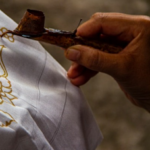
First, it is necessary to apply layers of hot beeswax to the areas of the fabric that you want to protect from the dye. This natural barrier will prevent the dye from penetrating, creating a color-resistant design. After applying the wax, the fabric is immersed in liquid dyes, usually natural, that adhere to the areas not covered by wax.

Next, the artisan will express their ideas, which are often designs with complex shapes and lines and especially colorful patterns. One of the most important characteristics is the harmony they achieve with a mix of colors. The most commonly used colors are yellow, blue, brown, and red. Colorful fabrics are mainly used to make accessories, clothing, and decorative items.
2. Wood Carving
The most commonly used local woods are teak, ebony, merbau, and sandalwood. However, the material used will depend on the piece being created. With this technique, artisans create ornamental pieces for temples, furniture, daily utensils, among others.
Having such a large number of islands, there is rich diversity in different places. For example, in the Minangkabau region, artisans create wooden roofs called "rumah gadang."

3. Basketry
To carry out this cultural tradition, artisans use natural materials such as palm leaves, bamboo, rattan, and plant fibers. Thanks to its durability and availability, bamboo is mostly used to create baskets, plates, trays, and decorative objects. For this reason, these creations are especially useful for transporting and storing food.

On the other hand, this technique is used to create bags, hats, and other fashion and decorative accessories for the home. In short, it is an essential and very useful discipline that reflects the skill and creativity of local artisans, as well as their knowledge of nature and its materials.
4. Silverware and Stone Sculptures
Finally, Indonesia also has a good reputation for its history and tradition of creating decorative objects and jewelry made from silver and other precious metals. The city of Yogyakarta, located on the island of Java, is known for its large number of workshops and artisans specialized in jewelry making.
In addition to silver, Indonesian artisans also work with other precious metals, such as gold and bronze. The use of precious and semi-precious stones, such as opal, amethyst, and coral, enhances their pieces by adding a unique touch of color.
We did not want to end the article without first mentioning the strong connection between stone craftsmanship and the culture and religion of the country. The archipelago is filled with temples where countless sculptures of all imaginable sizes can be found. The village of Batubulan in Bali is famous for its workshops and artists specialized in this art.
